Cryoablation of parietal endometriosis nodule
Cold-based destruction of an endometriosis nodule in the abdominal wall, most commonly at a cesarean scar site.
The information below is provided for general educational purposes only. It describes the procedure in general terms and may not apply to your specific situation. Only your interventional radiologist can provide you with personalized information adapted to your case.
What does this intervention involve?
Background and indications
Abdominal wall endometriosis typically develops in a cesarean scar and presents as a painful mass, cyclical with menstruation. Cryoablation is an alternative to surgical excision.
Benefits
Minimally invasive treatment under local anesthesia, no scar, abdominal wall preservation, very fast recovery.
Procedure
Under local anesthesia and ultrasound or CT guidance, a cryoablation needle is inserted into the endometriosis nodule. Two freeze-thaw cycles are performed. The procedure lasts approximately 30-45 minutes.
Risks
Skin injury (frostbite), local pain, hematoma, recurrence. Complications are rare.
Recovery and follow-up
Same-day discharge. Follow-up ultrasound at 3-6 months. Complete nodule resorption takes several months.
Practical information
Local anesthesia. Outpatient procedure (return home the same day).
This information does not replace a medical consultation. Each procedure is adapted to the patient's individual situation. Your doctor will explain the specific details, expected benefits and potential risks during your consultation.
Doctors and centers/departments performing this intervention
10 doctors
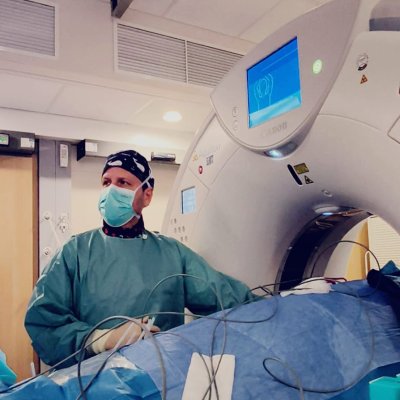
CHU Helora Site Jolimont
CHU (Centre Hospitalier Universitaire)La Louvière

Dr Frederic COHEN
Radiologue interventionnelAubagne, Marseille
Dr Arthur DAVID
Radiologue interventionnelNantes

Dr Vincent DUROUS
Radiologue interventionnelAnnecy, Argonay, Épagny
Dr Cédric FOUSSIER
Radiologue interventionnelParis
Hôpital Européen Marseille
Clinique privéeMarseille

Dr Matthieu PAPILLARD
Radiologue interventionnelGenève

Service de radiologie interventionnelle - CHU de NANTES
CHU (Centre Hospitalier Universitaire)Nantes
Service de radiologie interventionnelle - Hôpital de Valenciennes
Centre hospitalierValenciennes

Dr Nicolas VILLARD
Radiologue interventionnelLausanne