Uterine artery embolization (postpartum hemorrhage)
Emergency uterine artery embolization to stop severe bleeding after childbirth.
The information below is provided for general educational purposes only. It describes the procedure in general terms and may not apply to your specific situation. Only your interventional radiologist can provide you with personalized information adapted to your case.
What does this intervention involve?
Background and indications
Postpartum hemorrhage is a potentially fatal obstetric emergency. Embolization is offered when medical treatments (uterotonics) and obstetric maneuvers (uterine revision, balloon) have failed to stop bleeding.
Benefits
Stops bleeding while preserving the uterus (and therefore fertility), unlike hemostatic hysterectomy which is the surgical alternative.
Procedure
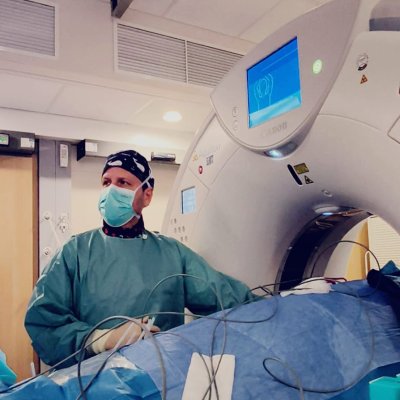
In emergency, a catheter is introduced via the femoral artery and guided to the uterine arteries. Resorbable gelatin is injected into both uterine arteries to stop bleeding. The procedure lasts 30 minutes to 1 hour.
Risks
Uterine ischemia (rare), focal necrosis, post-embolization fever. Success rate is approximately 90%.
Recovery and follow-up
Monitoring in maternity or intensive care. Fertility return is normal after resorbable gelatin embolization.
Practical information
Local anesthesia. Outpatient procedure (return home the same day).
This information does not replace a medical consultation. Each procedure is adapted to the patient's individual situation. Your doctor will explain the specific details, expected benefits and potential risks during your consultation.
Doctors and centers/departments performing this intervention
17 doctors

Centre Hospitalier de Saint-Quentin
Centre hospitalierSaint-Quentin

CHU CHARLEROI
CHU (Centre Hospitalier Universitaire)Charleroi
CHU Helora Site Jolimont
CHU (Centre Hospitalier Universitaire)La Louvière

Dr Frederic COHEN
Radiologue interventionnelAubagne, Marseille
Dr Arthur DAVID
Radiologue interventionnelNantes

Dr Vincent DUROUS
Radiologue interventionnelAnnecy, Argonay, Épagny

EMBOLILLE
Clinique privéeLesquin, Lille
Dr Cédric FOUSSIER
Radiologue interventionnelParis

Dr Quentin LAFERTÉ
Radiologue interventionnelSaint-Quentin

Dr Thibaud LEFORT
Radiologue interventionnelLyon
Dr Lucas MOSCATELLI
Radiologue interventionnelSaint-Paul

Dr Alexandre NÉROT
Radiologue interventionnelAnnecy, Argonay, Chambéry