Pelvic venous embolization (congestion syndrome)
Occlusion of dilated pelvic veins (pelvic varicocele) responsible for chronic pelvic pain.
The information below is provided for general educational purposes only. It describes the procedure in general terms and may not apply to your specific situation. Only your interventional radiologist can provide you with personalized information adapted to your case.
What does this intervention involve?
Background and indications
Pelvic congestion syndrome is a frequent but underdiagnosed cause of chronic pelvic pain in women, related to pelvic varicose veins (ovarian and uterine vein dilation). Embolization is offered after medical treatment failure.
Benefits
Pelvic pain improvement in 70-85% of cases, minimally invasive outpatient treatment, alternative to surgery.
Procedure
Under local anesthesia, a catheter is introduced via the jugular or femoral vein and guided successively into the ovarian and internal iliac veins. Coils and/or a sclerosing agent are used to close the incompetent veins. The procedure lasts 1-2 hours.
Risks
Transient pelvic pain, coil migration (exceptional), phlebitis, contrast reaction.
Recovery and follow-up
Same-day or next-day discharge. Symptom improvement is gradual over 2-4 weeks. Follow-up consultation at 3 months.
Practical information
Local anesthesia. Outpatient procedure (return home the same day).
This information does not replace a medical consultation. Each procedure is adapted to the patient's individual situation. Your doctor will explain the specific details, expected benefits and potential risks during your consultation.
Doctors and centers/departments performing this intervention
16 doctors

Centre Hospitalier de Saint-Quentin
Centre hospitalierSaint-Quentin

CHU CHARLEROI
CHU (Centre Hospitalier Universitaire)Charleroi
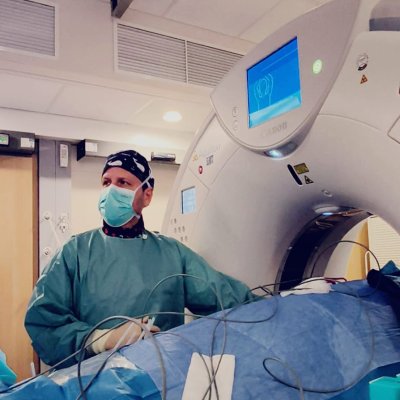
CHU Helora Site Jolimont
CHU (Centre Hospitalier Universitaire)La Louvière

Dr Frederic COHEN
Radiologue interventionnelAubagne, Marseille

Dr Vincent DUROUS
Radiologue interventionnelAnnecy, Argonay, Épagny

EMBOLILLE
Clinique privéeLesquin, Lille
Dr Cédric FOUSSIER
Radiologue interventionnelParis

Hôpital Européen Marseille
Clinique privéeMarseille

Dr Thibaud LEFORT
Radiologue interventionnelLyon
Dr Lucas MOSCATELLI
Radiologue interventionnelSaint-Paul

Dr Alexandre NÉROT
Radiologue interventionnelAnnecy, Argonay, Chambéry
Dr Matthieu PAPILLARD
Radiologue interventionnelGenève