Percutaneous hepatic tumor ablation
Percutaneous destruction of a liver tumor using a needle, employing heat (radiofrequency, microwave), cold (cryoablation) or other energies (IRE, laser, HIFU).
The information below is provided for general educational purposes only. It describes the procedure in general terms and may not apply to your specific situation. Only your interventional radiologist can provide you with personalized information adapted to your case.
What does this intervention involve?
Background and indications
This procedure is offered to treat certain liver tumors (hepatocellular carcinoma, liver metastases) when surgery is not the best option or as a complement to it. It targets tumors of small to medium size, generally less than 3-5 cm.
Benefits
This is a minimally invasive treatment that does not require opening the abdomen. Recovery is fast, with discharge often possible within 24-48 hours. Local tumor control results are excellent for appropriately sized lesions.
Procedure
Under general anesthesia or deep sedation, the radiologist inserts one or more fine needles through the skin into the tumor, guided by ultrasound or CT scan. The chosen energy (heat, cold or electrical current) is then applied to destroy the tumor. The procedure usually lasts 30 minutes to 2 hours depending on the number and size of lesions.
Risks
Complications are rare but may include bleeding at the puncture site or within the liver, infection (abscess), injury to a neighboring organ (bowel, gallbladder) or, exceptionally, bile duct damage. Post-procedural pain is common but generally well controlled with painkillers.
Recovery and follow-up
A 1-2 night hospital stay is usually required. A CT or MRI scan is performed approximately 4-6 weeks after the procedure to verify complete tumor destruction, followed by regular imaging surveillance.
Practical information
General anesthesia. Hospital stay: one to two nights.
This information does not replace a medical consultation. Each procedure is adapted to the patient's individual situation. Your doctor will explain the specific details, expected benefits and potential risks during your consultation.
Doctors and centers/departments performing this intervention
20 doctors
Dr Ignacio ANDRES CANO
Radiologue interventionnelRennaz

Centre Hospitalier de Saint-Quentin
Centre hospitalierSaint-Quentin
CHU CHARLEROI
CHU (Centre Hospitalier Universitaire)Charleroi
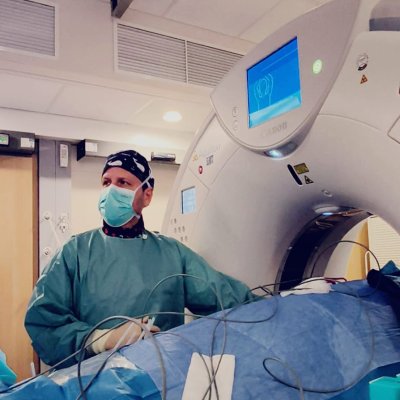
CHU Helora Site Jolimont
CHU (Centre Hospitalier Universitaire)La Louvière
Dr Frederic COHEN
Radiologue interventionnelAubagne, Marseille

Dr Alexia DABADIE
Radiologue interventionnelDr Arthur DAVID
Radiologue interventionnelNantes
Dr Vincent DUROUS
Radiologue interventionnelAnnecy, Argonay, Épagny

EMBOLILLE
Clinique privéeLesquin, Lille
Dr Cédric FOUSSIER
Radiologue interventionnelParis
Hôpital Européen Marseille
Clinique privéeMarseille
Dr Quentin LAFERTÉ
Radiologue interventionnelSaint-Quentin