Hepatic chemoembolization (TACE)
Injection of chemotherapy directly into the arteries feeding the liver tumor, combined with artery occlusion to concentrate and prolong the treatment effect.
The information below is provided for general educational purposes only. It describes the procedure in general terms and may not apply to your specific situation. Only your interventional radiologist can provide you with personalized information adapted to your case.
What does this intervention involve?
Background and indications
Chemoembolization is primarily offered for intermediate-stage hepatocellular carcinoma (primary liver cancer) or certain hepatic metastases when surgery or transplantation are not possible.
Benefits
By concentrating chemotherapy directly in the tumor and cutting off its blood supply, this treatment is more effective and better tolerated than standard intravenous chemotherapy. It can slow disease progression and sometimes significantly reduce tumor size.
Procedure
Under local anesthesia and sedation, a catheter is introduced through the femoral (groin) or radial (wrist) artery and guided to the hepatic arteries feeding the tumor. The radiologist then injects a mixture of chemotherapy and embolization particles. The procedure lasts approximately 1-2 hours.
Risks
Post-embolization syndrome is common in the following days: abdominal pain, nausea, mild fever and fatigue. Rarer complications include liver abscess, liver failure or gallbladder damage.
Recovery and follow-up
A 1-3 night hospital stay is typical. CT or MRI is performed 4-8 weeks later to assess tumor response. Multiple sessions may be needed, spaced 6-8 weeks apart.
Practical information
Local anesthesia. Outpatient procedure (return home the same day).
This information does not replace a medical consultation. Each procedure is adapted to the patient's individual situation. Your doctor will explain the specific details, expected benefits and potential risks during your consultation.
Doctors and centers/departments performing this intervention
19 doctors
Dr Ignacio ANDRES CANO
Radiologue interventionnelRennaz

Centre Hospitalier de Saint-Quentin
Centre hospitalierSaint-Quentin
CHU CHARLEROI
CHU (Centre Hospitalier Universitaire)Charleroi
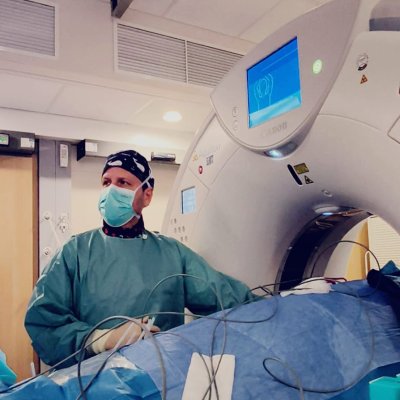
CHU Helora Site Jolimont
CHU (Centre Hospitalier Universitaire)La Louvière
Dr Frederic COHEN
Radiologue interventionnelAubagne, Marseille
Dr Arthur DAVID
Radiologue interventionnelNantes
Dr Vincent DUROUS
Radiologue interventionnelAnnecy, Argonay, Épagny

EMBOLILLE
Clinique privéeLesquin, Lille
Dr Cédric FOUSSIER
Radiologue interventionnelParis
Hôpital Européen Marseille
Clinique privéeMarseille

Dr Quentin LAFERTÉ
Radiologue interventionnelSaint-Quentin

Dr Thibaud LEFORT
Radiologue interventionnelLyon