High-flow priapism embolization
Selective embolization of the arteriocavernosal fistula responsible for high-flow priapism, usually post-traumatic.
The information below is provided for general educational purposes only. It describes the procedure in general terms and may not apply to your specific situation. Only your interventional radiologist can provide you with personalized information adapted to your case.
What does this intervention involve?
Background and indications
High-flow priapism is a prolonged erection caused by an arteriocavernosal fistula, often after perineal trauma. Unlike low-flow (ischemic) priapism, it is not an immediate emergency but requires treatment to prevent complications.
Benefits
Targeted fistula treatment with erectile function preservation in most cases.
Procedure
A catheter is guided via the femoral artery to the internal pudendal artery then cavernous artery. The fistula is embolized with resorbable gelatin (preferred for erectile function preservation) or microcoils. The procedure lasts 1-2 hours.
Risks
Erectile dysfunction (usually transient with resorbable gelatin), fistula recurrence requiring repeat embolization.
Recovery and follow-up
One-night hospitalization. Follow-up consultation at 1 month with erectile function assessment.
Practical information
Local anesthesia. Outpatient procedure (return home the same day).
This information does not replace a medical consultation. Each procedure is adapted to the patient's individual situation. Your doctor will explain the specific details, expected benefits and potential risks during your consultation.
Doctors and centers/departments performing this intervention
13 doctors

CHU CHARLEROI
CHU (Centre Hospitalier Universitaire)Charleroi
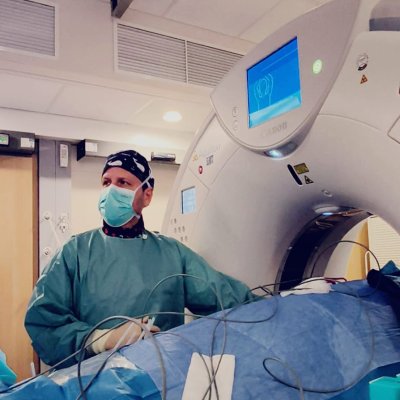
CHU Helora Site Jolimont
CHU (Centre Hospitalier Universitaire)La Louvière

Dr Frederic COHEN
Radiologue interventionnelAubagne, Marseille
Dr Arthur DAVID
Radiologue interventionnelNantes

Dr Vincent DUROUS
Radiologue interventionnelAnnecy, Argonay, Épagny
Dr Cédric FOUSSIER
Radiologue interventionnelParis

Hôpital Européen Marseille
Clinique privéeMarseille
Dr Lucas MOSCATELLI
Radiologue interventionnelSaint-Paul

Dr Alexandre NÉROT
Radiologue interventionnelAnnecy, Argonay, Chambéry

Dr Matthieu PAPILLARD
Radiologue interventionnelGenève

Service de radiologie interventionnelle - CHU de NANTES
CHU (Centre Hospitalier Universitaire)Nantes
Service de radiologie interventionnelle - Hôpital de Valenciennes
Centre hospitalierValenciennes